

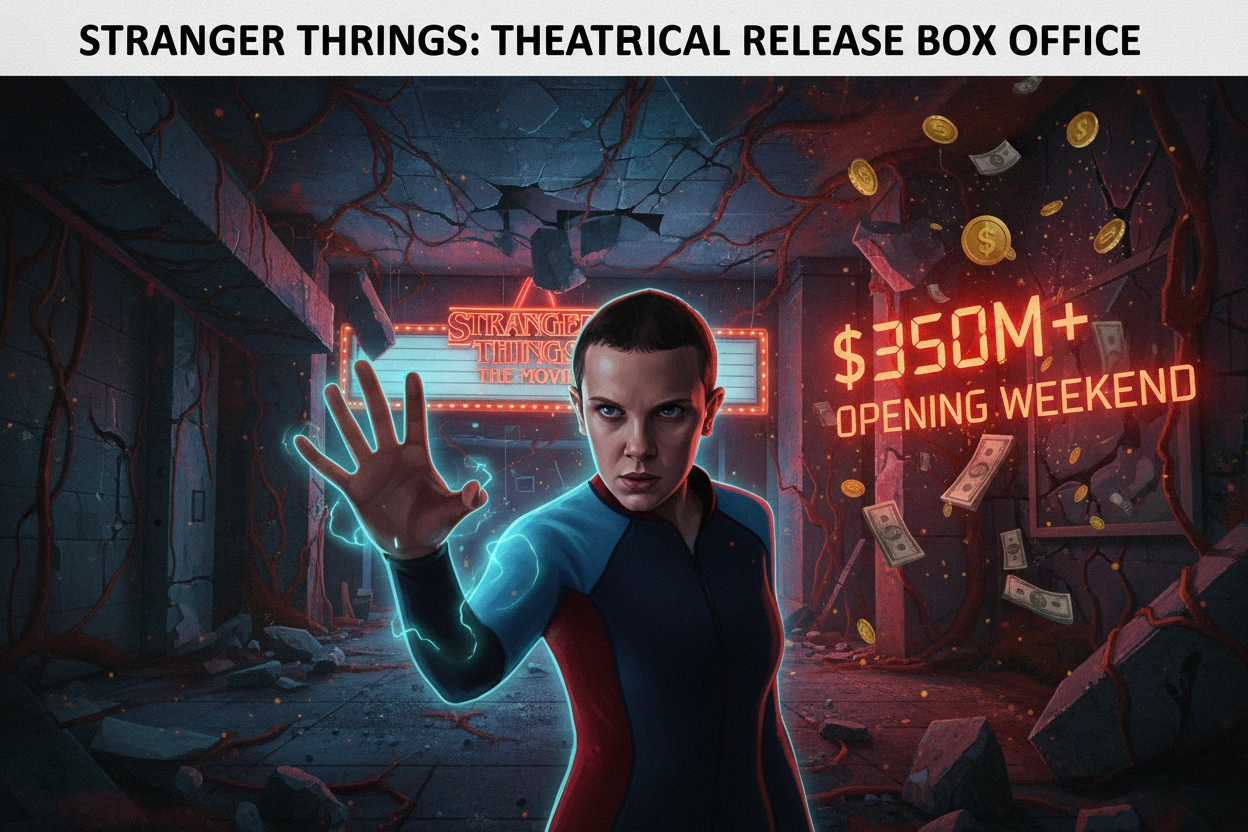
Stranger Things theatrical release box office numbers would be impressive for a mid‑budget movie—let alone a single TV episode playing while it also streamed at home. Estimates put the Stranger Things theatrical release box office haul between $20 million and more than $25 million over New Year’s Eve and New Year’s Day, across roughly 600 U.S. theaters. That double‑digit millions figure, packed into a two‑day window, shows how strong demand still is to experience Hawkins on a giant screen with a screaming crowd.
Stranger Things theatrical release box office by the numbers
To really grasp the Stranger Things theatrical release box office story, it helps to look at how unusual the setup was. Because of cast residual agreements, theaters technically didn’t sell traditional tickets for the finale; instead, fans reserved seats by purchasing mandatory food‑and‑beverage vouchers, typically between about $11 and $20 depending on the chain. AMC and Cinemark charged around $20, while Regal famously pegged its voucher at $11 as a wink to Eleven.
Yet even with this workaround, independent trackers estimate around 1.3 million admissions during the Stranger Things theatrical release box office run, with AMC alone drawing about 753,000 viewers and more than $15 million in concession revenue. Across chains, sources suggest the Stranger Things theatrical release box office plus concessions for theaters cleared well north of $25 million, possibly closer to $30 million in total benefit for exhibitors.
Records set by the Stranger Things theatrical release box office experiment
The Stranger Thing theatrical release box office experiment didn’t happen in a vacuum. Netflix had already tested hybrid models with events like K‑Pop Demon Hunters, which pulled around $18 million theatrically even after being available on streaming. But Stranger Things theatrical release box office performance blew past those trials, now considered Netflix’s most successful limited theatrical rollout to date, with many estimates clustering in the $25–28 million range for the finale alone.
Because tickets were structured as vouchers, much of the Stranger Things theatrical release box office power shows up as concession revenue. Some industry analysts point out that theaters may have cleared $25–30 million just from these voucher‑tied sales, with more than 60% of that coming from AMC locations. For comparison, over the same New Year’s frame, Avatar: Fire and Ash is reported to have earned slightly less at the domestic box office, which makes the Stranger Things theatrical release box office story even more startling.
Key facts about the Stranger Things theatrical release box office
| Detail | Exact fact |
| Stranger Thing theatrical release box office haul | Estimated $20–25M+ in two days, some reports say up to $28M. |
| Theatrical window | New Year’s Eve and New Year’s Day only, alongside streaming. |
| Theater count | Around 600 cinemas participated, including AMC, Regal, Cinemark. |
| Admissions | ~1.3M total, with 753K at AMC alone. |
| Concessions revenue | $15M at AMC; $25–30M estimated across all chains. |
| Pricing model | No ticket charge; mandatory $11–$20 food/drink vouchers instead. |
These figures are why so many observers say the Stranger Things theatrical release box office moment quietly rewrote the rulebook for TV finales.

Why fans powered the Stranger Things theatrical release box office
From a human perspective, the Stranger Things theatrical release box office surge wasn’t just about money. After nearly a decade with these characters, fans wanted a communal goodbye, not just a solo binge at home. A two‑day, one‑episode event created genuine FOMO: limited seats, a ticking clock, and social feeds filled with photos of packed midnight shows and cosplay in theater lobbies. That emotional urgency is the real fuel behind the Stranger Things theatrical release box office success.
The experience also felt special. Seeing the finale’s roughly two‑hour runtime in a cinema—longer than many feature films—meant surround sound for Demogorgon roars, collective gasps for character fates, and applause rolling through end credits. In that sense, the Stranger Things theatrical release box office reflects something simple: people still love the ritual of going to the movies when the story feels big enough, even if it technically lives on a streaming app.
What the Stranger Things theatrical release box office means for the future
Studios and streamers are already studying the Stranger Things theatrical release box office playbook. By pairing day‑and‑date streaming with a short, high‑impact theatrical window, Netflix proved it can serve both homebodies and die‑hard fans without cannibalizing either audience. The Duffer Brothers now carry that leverage into their next chapter, including a four‑year film deal with Paramount once their Netflix contract ends in 2026, and more Upside Down Pictures projects like stage plays and animated spin‑offs.
For theaters still recovering from soft attendance, the Stranger Thing theatrical release box office event offers a path: partner with fandom‑heavy series, treat finales like concert tours, and lean into concessions‑driven economics instead of only traditional tickets. If anything, the Stranger Things theatrical release box office story suggests that in a crowded digital world, what people will always pay for is the feeling of being there, together, when something ends.
Check out the Latest Hindi News here












Leave a Reply