


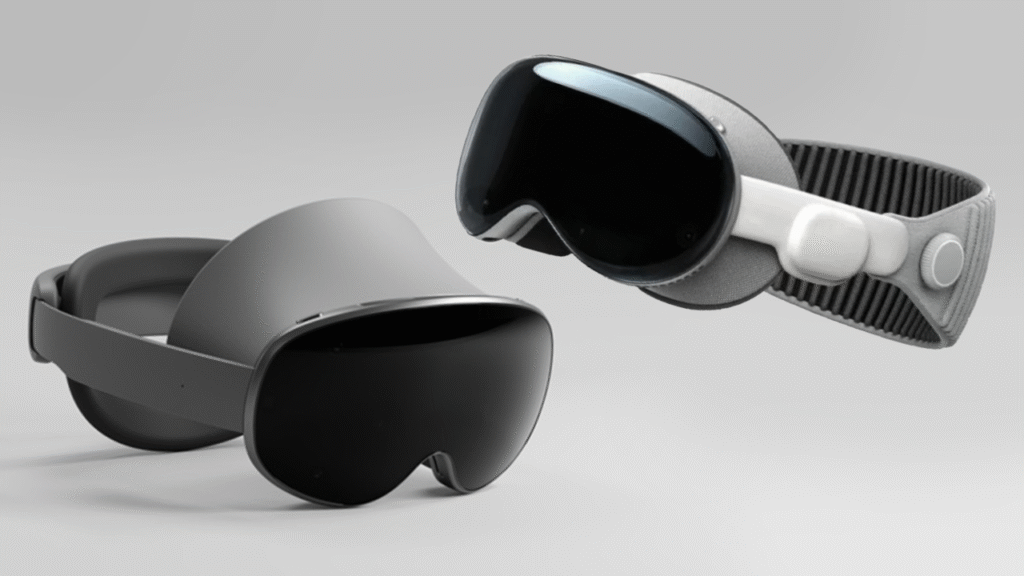
In the rapidly evolving world of augmented and mixed reality, two giants are duking it out: Samsung and Apple. While Apple’s Vision Pro has taken much of the spotlight, Samsung is quietly developing Project Moohan, a bold contender that could shake up the AR/VR landscape Samsung Project Moohan vs Apple Vision Pro.
What Is Project Moohan?
Project Moohan is Samsung’s next-gen AR headset in development. Though still under wraps, leaks and insiders hint at advanced display technology, sleek design, and features meant to rival (or perhaps surpass) Apple’s Vision Pro. Samsung aims to push AR/VR boundaries with enhanced immersion, seamless app integration, and a strong ecosystem tie-in with its mobile products. Samsung Project Moohan vs Apple Vision Pro.
Key Specs: Samsung vs Apple
Here’s how the rumored and confirmed specs stack up:
| Spec | Project Moohan (Samsung) | Apple Vision Pro |
|---|---|---|
| Display | Dual micro-OLED or advanced panels (rumored) | 4K per-eye micro-OLED |
| Field of View | Wide field (rumor: ~120°) | ~110° |
| Processing | High-end chipset, perhaps custom silicon | Apple M2 + R1 chip |
| Battery / Wearability | Wearable, possibly external pack | Internal battery, wearable straps |
| Ecosystem | Samsung Galaxy / Android integration | Tight Apple ecosystem integration |
| Price (expected / actual) | TBD, likely competitive | Premium price (> $3,000) |
Even though Samsung’s specs are not yet confirmed, leaks suggest its ambitions are bold. Analysts expect Moohan to be more accessible (in price) and better integrated for Android users.
Strengths & Weaknesses
✅ Strengths of Project Moohan
- Seamless Android integration: For Samsung and Android users, Moohan could offer a more natural fit than Apple Vision Pro.
- Potential cost advantage: Samsung may price Moohan more competitively, making AR more accessible.
- Hardware innovation: Reports hint at cutting-edge display tech and modular design.
⚠️ Challenges for Moohan
- Software ecosystem maturity: Apple already has apps, dev tools, and content synergy. Samsung must play catch-up.
- User trust & brand perception: Apple is seen as premium and reliable. Samsung must establish comparable credibility in AR.
- Energy & thermal management: AR headsets struggle with heat and battery life; engineering these optimally is tough.
Apple’s Vision Pro is maturee but carries the premium price burden and limited freedom outside its walled garden. Samsung Project Moohan vs Apple Vision Pro.

Top 5 Foldable Phones
What It Means for Consumers & the AR Market
- More choice, less monopoly: A viable competitor means consumers aren’t locked into one ecosystem.
- Faster innovation: Samsung vs. Apple rivalry accelerates progress in displays, optics, and user interactions.
- Ecosystem pressure: Apple may lower prices or open APIs; Samsung must match app developer incentives.
Users with Android phones may favor Project Moohan, while Apple devotees may stick with Vision Pro. But the competition is what truly benefits users.
How to Use This Info (for Your Blog or Tech Writing)
- Be up to date: Monitor leaks and official announcements—Samsung may drop new info any moment.
- Cite credible sources only: Use patents, company filings, trusted tech news (like Mashable, The Verge, etc.).
- Add expert quotes or interviews: Talk to AR developers, hardware engineers, or foresight analysts.
- Use visuals & spec tables: Helps readability and enhances credibility.
- Update posts dynamically: As specs change, make edits and note them (so Google sees freshness). also you can refer below video credits to : Jason Howell
Final Thoughts
Samsung’s Project Moohan may not be perfect yet, but it represents a crucial inflection point in AR competition. While Apple reigns today, Moohan has the potential to broaden the market, democratize access, and push innovation faster.
If Samsung plays its cards right—with hardware, software, and ecosystem synergy—Project Moohan could be a game-changer. In tech, that word isn’t used lightly—but it might just apply here.











Leave a Reply