

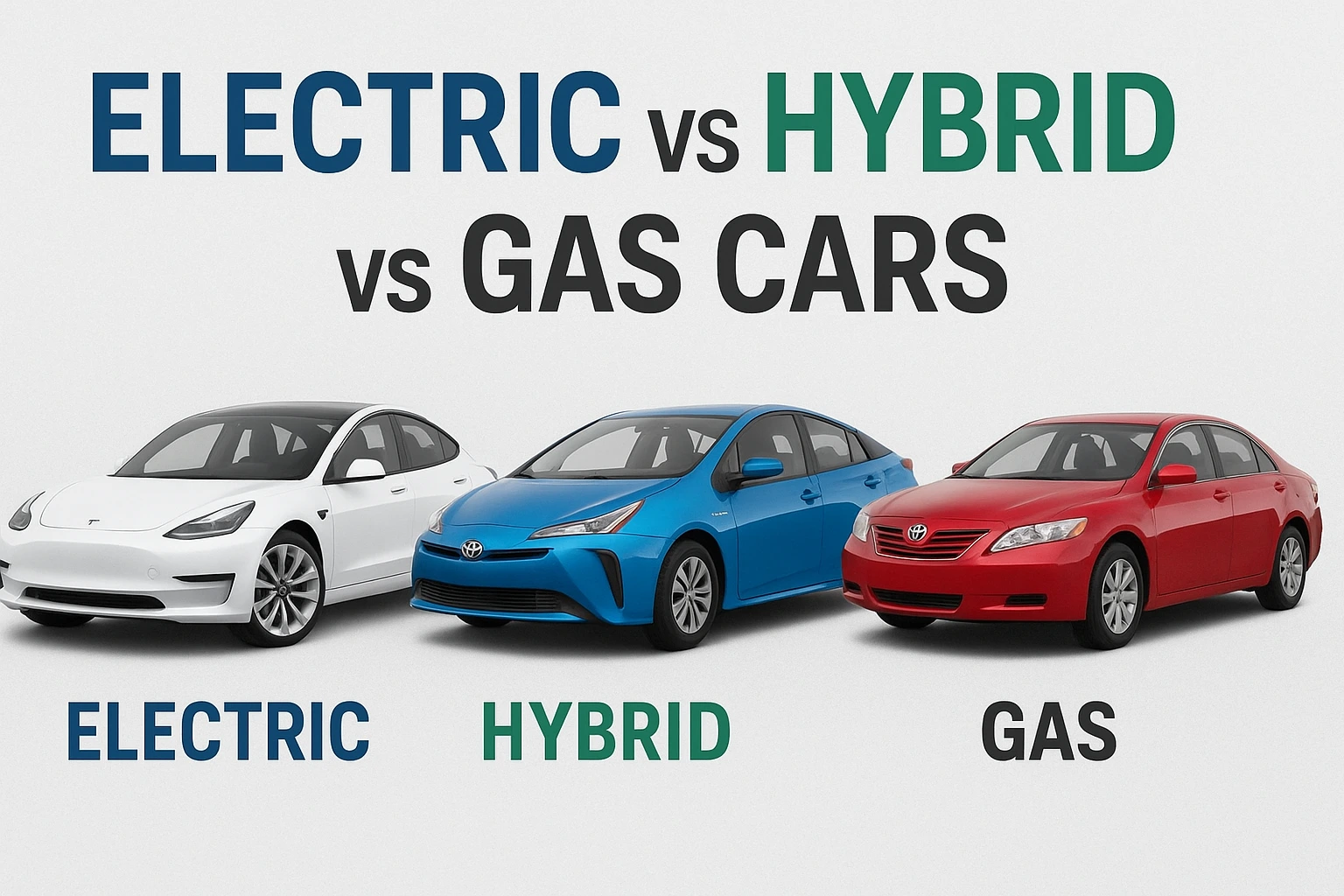
EV vs Hybrid vs Gas Cars: Which Is the Smarter Long-Term Investment?
The automotive world is changing fast — and so are drivers’ priorities. With rising fuel prices, stricter emission standards, and improved battery technology, many car buyers are now comparing EV vs Hybrid vs Gas Cars before making their next purchase.
But which one actually makes the most sense — financially and environmentally? Let’s break down the real cost, performance, and long-term value of each option to help you make an informed decision.
⚡ 1. Electric Vehicles (EVs): Clean, Quiet, and Cost-Efficient
Electric vehicles are powered entirely by batteries, which means zero tailpipe emissions and no dependency on gasoline. Modern EVs from brands like Tesla, Hyundai, and Ford are proving that electric driving can be powerful, practical, and enjoyable. EV vs Hybrid vs Gas Cars.
Pros:
- Low running costs: Electricity is cheaper than fuel per mile driven.
- Minimal maintenance: No oil changes, fewer moving parts, lower wear and tear.
- Tax credits and incentives: Many countries offer rebates or tax cuts for EV buyers.
- Eco-friendly: Zero tailpipe emissions contribute to cleaner air.
Cons:
- Higher upfront cost: EVs are still more expensive initially.
- Charging infrastructure: Not all areas have enough charging stations yet.
- Battery degradation: Over time, battery capacity can slightly reduce range.
Verdict: Perfect for urban drivers and those with access to home charging — offering long-term savings despite higher initial costs.

Upcoming Movies in November 2025.
🔋 2. Hybrid Cars: The Balanced Middle Ground
Hybrid vehicles combine a gas engine with an electric motor, switching intelligently between both to maximize efficiency. Models like the Toyota Prius, Honda Accord Hybrid, and Hyundai Ioniq have made hybrids mainstream for good reason. EV vs Hybrid vs Gas Cars.
Pros:
- Great fuel efficiency: Uses both gas and electric power to save fuel.
- No charging needed: Most hybrids self-charge while driving.
- Affordable options: Lower entry cost than full EVs.
- Lower emissions: Significantly cleaner than traditional gas vehicles.
Cons:
- Complex systems: Two powertrains mean slightly higher maintenance risk.
- Moderate savings: Not as cost-efficient as full EVs for long-term ownership.
- Limited electric range: Can only go a few miles on electric mode.
Verdict: Ideal for drivers who want better mileage without worrying about charging. Hybrids deliver the right mix of convenience, affordability, and efficiency.
⛽ 3. Gas-Powered Cars: Familiar, Accessible, But Costlier Over Time
Gasoline vehicles have been the standard for over a century. While modern engines are more efficient than ever, the rising costs of fuel and maintenance make them less appealing in the long run. EV vs Hybrid vs Gas Cars.
Pros:
- Lower upfront cost: Generally cheaper to buy new or used.
- Easier refueling: Gas stations are everywhere.
- Variety: Huge selection of models across all price ranges.
Cons:
- High fuel expenses: Gasoline prices are unpredictable and rising.
- Regular maintenance: Oil changes, filters, exhaust, and more.
- Pollution: Higher carbon emissions than hybrid or electric cars.
Verdict: A practical short-term choice, but not ideal for drivers seeking sustainability or long-term savings.

💰 Cost Comparison: EV vs Hybrid vs Gas Cars
| Category | Electric | Hybrid | Gas |
|---|---|---|---|
| Purchase Price | High | Moderate | Low |
| Fuel / Energy Cost | Very Low | Medium | High |
| Maintenance Cost | Low | Moderate | High |
| Emissions | None | Low | High |
| Government Incentives | Yes | Sometimes | No |
Long-Term Winner: ⚡ Electric Vehicles — while the initial price is higher, the lifetime cost of ownership is usually lower, thanks to savings on fuel and maintenance.
🌍 Environmental Impact
Switching from gas-powered cars to electric or hybrid models significantly reduces greenhouse gas emissions. Even when factoring in electricity generation, EVs have a much smaller carbon footprint than vehicles running on fossil fuels.
- EVs reduce CO₂ emissions by up to 70% compared to gas cars.
- Hybrids cut emissions by 30–40% on average.
- Gas cars continue to be the largest source of urban air pollution.
🔮 Future Outlook: The Road Ahead
Automakers are rapidly transitioning toward electrification. Governments worldwide have set targets to phase out gasoline vehicles by 2035, and major brands like Ford, GM, and Toyota are investing heavily in EV and hybrid lineups.
In the near future:
- EV battery costs will drop further.
- Charging networks will expand globally.
- Hybrid systems will become even more efficient.
The shift toward sustainability is no longer optional — it’s the future of driving.
✅ Final Verdict For EV vs Hybrid vs Gas Cars
| Type | Best For | Long-Term Advantage |
|---|---|---|
| Electric Vehicles | Eco-conscious and city drivers | Lowest long-term cost |
| Hybrid Cars | Balanced users | Great mix of efficiency & convenience |
| Gas Cars | Budget-conscious short-term buyers | Low entry price, higher running cost |
Choosing between electric, hybrid, and gas cars depends on your lifestyle and driving habits — but the trend is clear: sustainable options are winning the long game.
💬 What do you think?
Are you planning to switch to an electric or hybrid car soon?
Share your thoughts in the comments below — and stay tuned to Myapne.org for the latest updates on automobiles, tech, and innovation.












Leave a Reply