

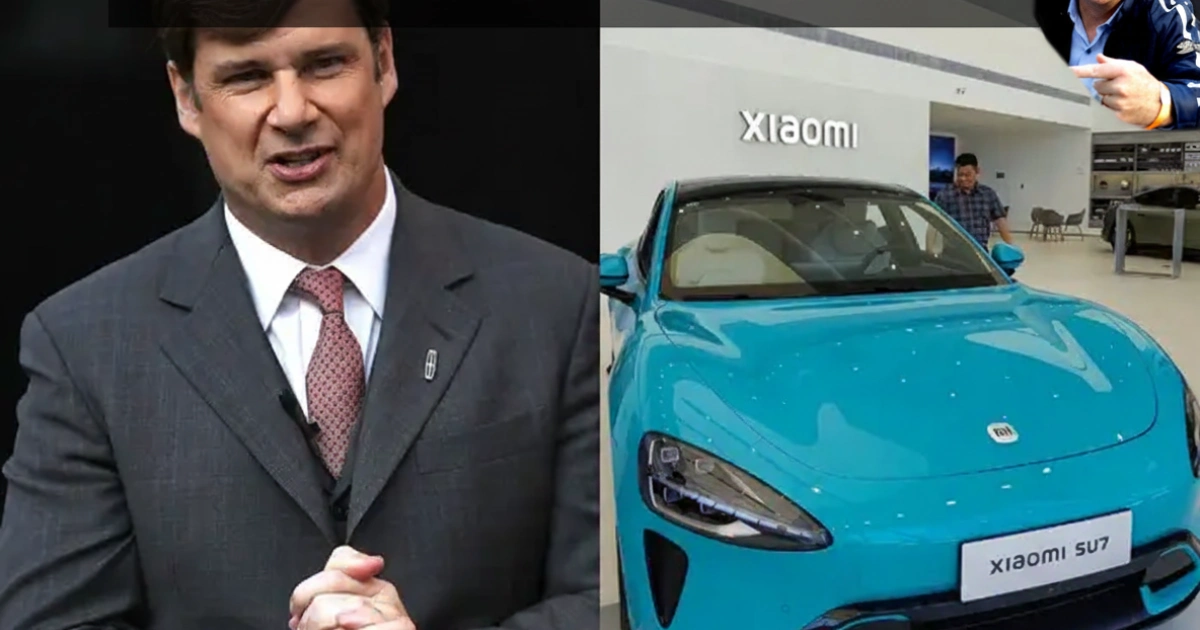
In the century-long history of American car manufacturing, few confessions have been as candid, and as strategically telling, as the one recently delivered by Ford CEO Jim Farley. Ford CEO Taking Apart Tesla Chinese EVs. The CEO admitted that having his team tear down and analyze the electric vehicles (EVs) of Ford’s chief rivals—Tesla and emerging Chinese manufacturers—was a “shocking” and “humbling” experience that fundamentally forced the automaker to overhaul its entire future strategy. This wasn’t a PR stunt; it was an urgent audit spurred by a massive and existential competitive threat.
The reality uncovered when the Ford CEO taking apart Tesla Chinese EVs is a stark look at the efficiency gap between legacy auto giants and the new world of mobility. It is a human story of awakening within a massive, historic corporation, realizing that the old rules no longer apply. For every Ford engineer, the hands-on dissection confirmed a terrifying truth: the competition is not just slightly ahead; they operate on a fundamentally different, far more efficient engineering blueprint. In the first 10% of this article, we peel back the layers on this automotive wake-up call, exploring the exact facts that humbled the Detroit executive and what they mean for the future of your wallet and the American car industry.
The Shocking Truth Found Inside Tesla’s Model 3
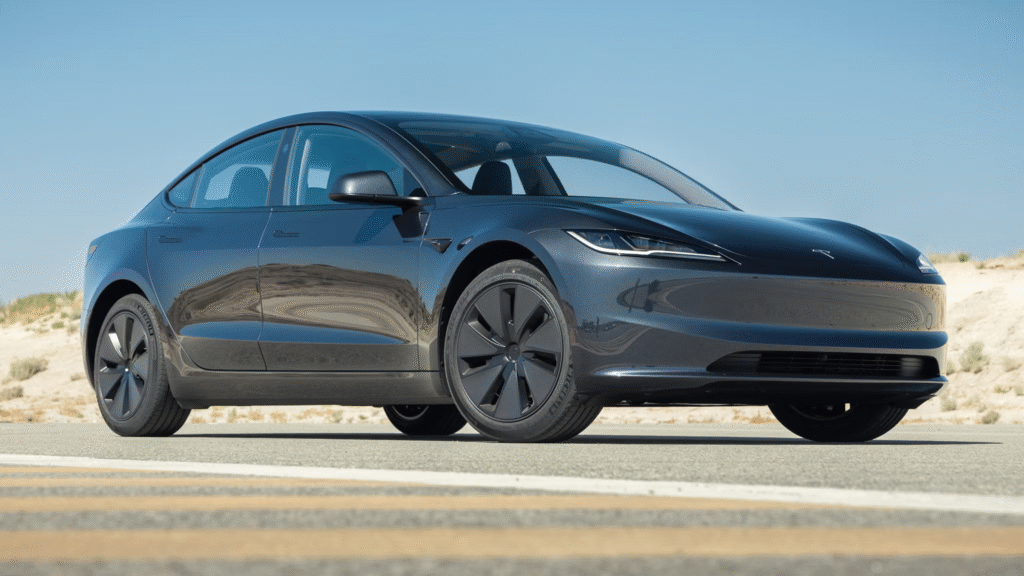
The first moment of stark realization came when Ford’s engineers benchmarked their own flagship EV, the Mustang Mach-E, against the Tesla Model 3. Dismantling a competitor’s car is standard industry practice, but what they found inside the Tesla was anything but standard.
The core difference lay in simplicity and integration. Tesla’s architecture was ruthlessly efficient, a realization that immediately brought the legacy automaker’s own complexity into sharp relief.
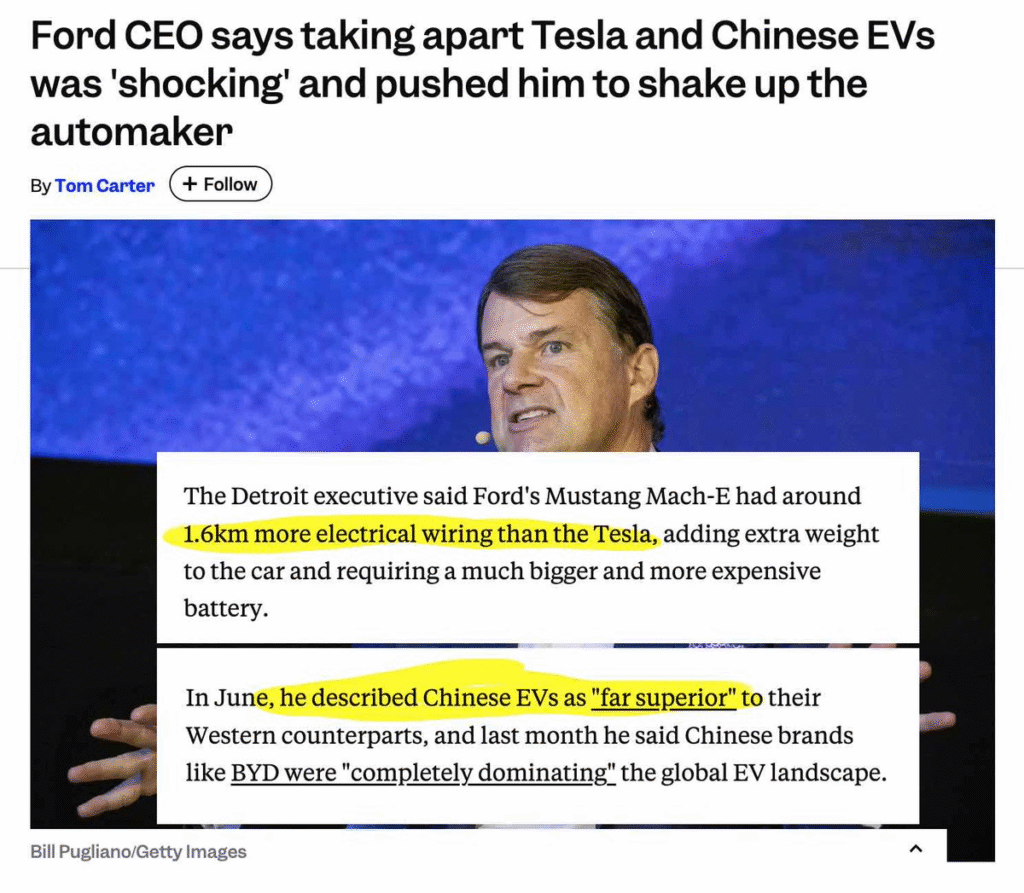
Exact Fact: Ford CEO Jim Farley stated that the Mustang Mach-E was weighed down by an extra 1.6 kilometers (or about one mile) of electrical wiring compared to the Tesla Model 3.
This seemingly small fact has massive financial and engineering consequences. That excess wiring is heavy, requiring a larger and more expensive battery to achieve the same range as the lighter, more compact Tesla. It adds cost, complexity, and weight to the vehicle. The efficiency gap immediately showed Ford that its method of building EVs—often adapting existing internal combustion engine (ICE) frameworks—was fundamentally flawed and unsustainable in a global cost-cutting war. The moment the Ford CEO taking apart Tesla Chinese EVs happened, it was clear that Ford needed a complete structural reset.
The Existential Threat: Ford CEO Taking Apart Tesla Chinese EVs
While Tesla represented superior domestic engineering, the Chinese automakers presented a different, and perhaps more terrifying, challenge: unbeatable cost and speed.
Farley has repeatedly warned that Chinese EV makers pose an “existential threat” to the U.S. auto industry—a threat he recently compared to the rise of Japanese automakers in the 1980s, only “on steroids.” His subsequent decision to have his team tear down and analyze Chinese models like the Xiaomi SU7 cemented this concern.
- Cost Superiority: Chinese manufacturers like BYD have achieved a level of vertical integration—controlling everything from the battery supply chain to software—that allows them to produce reliable, feature-rich EVs at prices Western automakers cannot match. The dismantling process confirmed that their engineering wasn’t just cheap; it was intelligently designed for low-cost, high-volume production.
- Technological Integration: The teardowns revealed superior in-vehicle technology. Chinese EVs often boast seamless digital integration where the driver’s entire digital life is mirrored in the car without the hassle of pairing a phone—a consumer-friendly feature Ford and its peers are still struggling to master.
The experience of the Ford CEO taking apart Tesla Chinese EVs confirmed a two-front war: one for technological leadership (Tesla) and one for cost and global market dominance (China). The lessons were clear: Ford needed to build smaller, simpler, and radically more cost-effective vehicles to survive.
From Humbled to Heroic: The Ford Overhaul
Farley’s response to these “shocking” findings was immediate and drastic. Rather than ignoring the brutal reality, he used the transparency of the failure to drive internal change—a classic example of a “human touch” leadership style.
- The Model E Spinoff: In 2022, Farley took the drastic step of spinning off Ford’s EV operations into a dedicated division called Model E. This move was designed to foster the speed, accountability, and clean-sheet engineering philosophy necessary to mimic the success of Tesla and Chinese rivals. Farley acknowledged that Model E would face brutal financial losses initially—projected to exceed $5 billion in 2024 and likely similar losses in 2025—but he views it as a necessary cost of adaptation.
- The Skunkworks Team: The intelligence gathered when the Ford CEO taking apart Tesla Chinese EVs directly fueled the creation of a secretive “skunkworks” team. This group is focused entirely on developing a radically different approach to building low-cost, smaller EVs that can compete directly with BYD’s efficiency.
- New Product Strategy: The ultimate response is a new production line focused on affordability. Ford is now shifting focus toward an intermediate-sized electric truck planned for a 2027 launch, targeting a consumer-friendly price point around $30,000. This pivot is a direct result of Farley realizing the American market is hungry for affordable EVs, not the $70,000-$80,000 luxury trucks Ford initially pursued.
The story of the Ford CEO taking apart Tesla Chinese EVs is a narrative of industrial survival. It proves that in the 21st-century auto industry, complacency is death, and even a company with over a century of heritage must be willing to dismantle its past assumptions to build a competitive future. The fight is on, and the next few years will determine whether legacy auto can truly adapt to the lean, mean, all-electric competition it just learned to respect.








Leave a Reply