

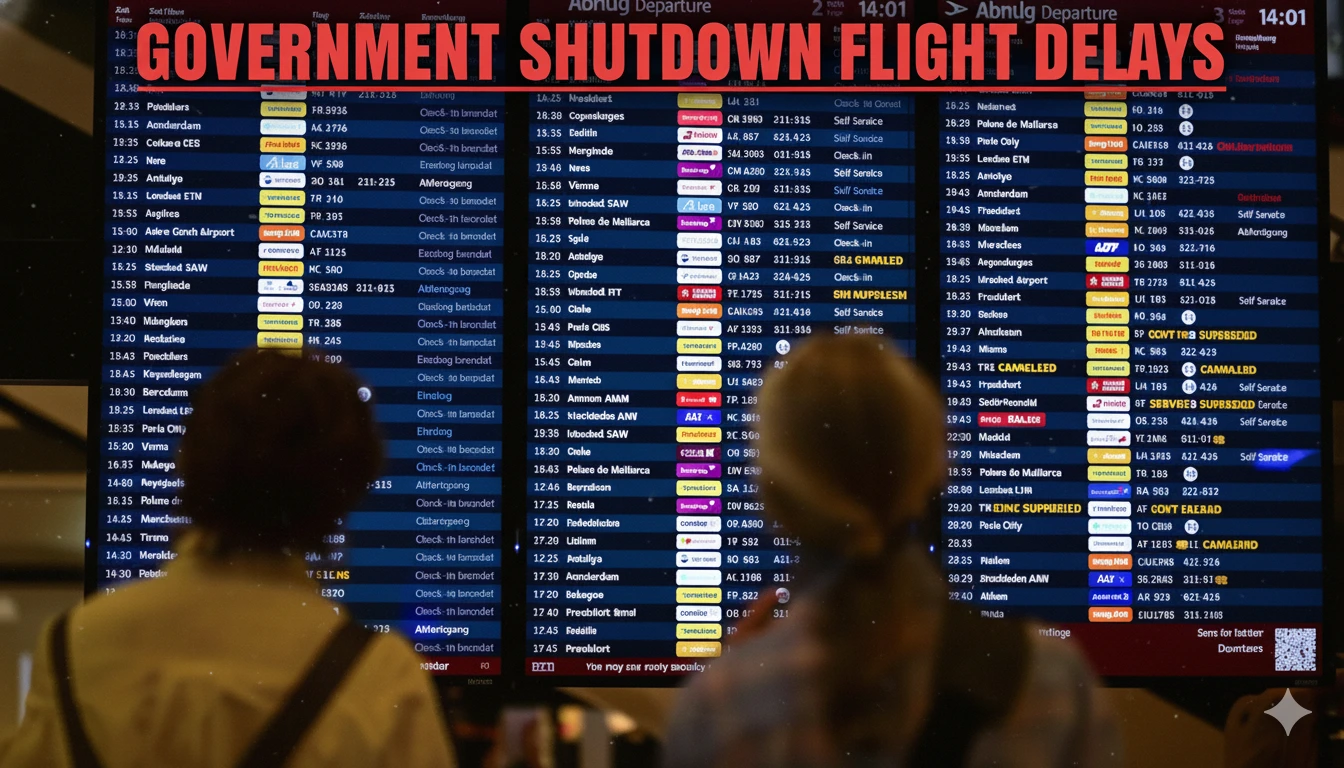
The ongoing government shutdown flight delays are wreaking havoc across U.S. airports, marking the longest federal funding impasse in history. The Federal Aviation Administration (FAA) mandated flight reductions of up to 10% beginning November 7, 2025, at 40 major airports nationwide. This unprecedented measure aims to relieve overworked air traffic controllers and TSA workers who have been working without pay for over a month. The consequences are severe: tens of thousands of flights have been delayed or canceled, affecting over 3.2 million travelers and causing widespread frustration and uncertainty in the travel industry.
Why Government Shutdown Flight Delays Are Escalating
The shutdown has forced approximately 13,000 air traffic controllers and 50,000 TSA officers to work without compensation, leading to a drastic shortage of staff at the busiest airports. This has resulted in increased safety concerns, prompting Transportation Secretary Sean Duffy to approve flight reductions ranging from an initial 4% to an eventual 10% if the shutdown continues into mid-November. Major transit hubs like Atlanta, Dallas, Denver, and Los Angeles have been heavily impacted, with airlines including Delta, American, and United announcing hundreds of daily cancellations. For example, over 800 flights were canceled nationwide just on November 7, with more cancellations expected as the shutdown persists.
What’s Behind the Government Shutdown Flight Delays?
At the core of the government shutdown flight delays are two major issues: staffing shortages and budget freezes. When a shutdown begins, nonessential government employees—including many in administrative and support roles at the FAA—are furloughed.
That leaves air traffic controllers, TSA agents, and essential aviation staff stretched thin. These professionals are still working, but often without pay, creating low morale and high stress.
The Federal Aviation Administration (FAA) has already reported reduced operational capacity at key control centers, which directly causes flight delays, reduced routing options, and, in some cases, full cancellations.
Experts say the longer the shutdown continues, the worse the government shutdown flight delays will get.
Airports Hit the Hardest
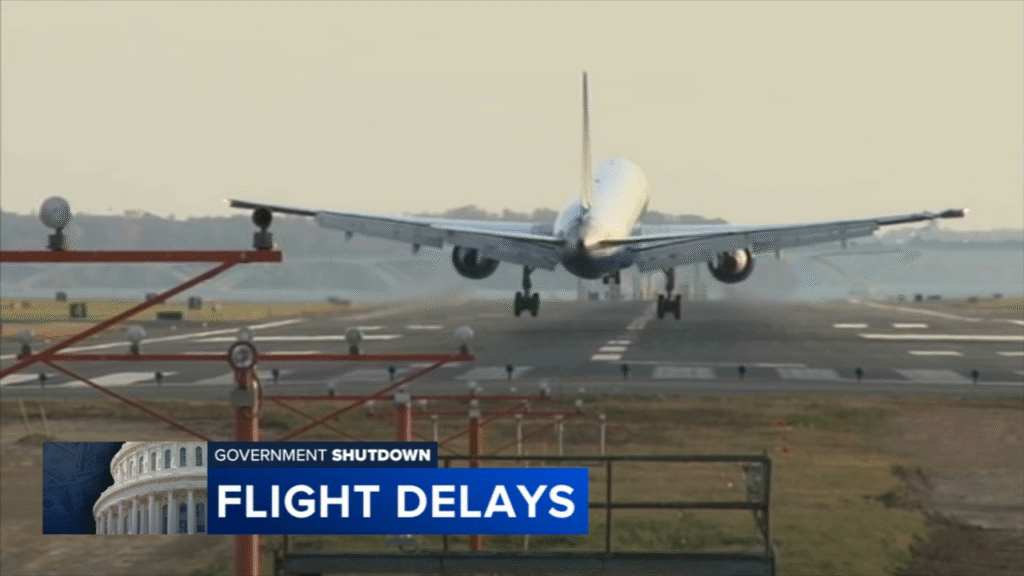
Certain airports have been disproportionately affected by the government shutdown flight delays.
According to flight data released this week:
- Atlanta (ATL) and Chicago O’Hare (ORD) saw average departure delays of over 90 minutes.
- Newark (EWR) and Dallas-Fort Worth (DFW) reported significant TSA staffing shortages.
- Washington D.C. (DCA) flights were cut back due to limited controller capacity.
The domino effect means even flights departing on time often face longer queues for landing, as destination airports struggle with similar staffing bottlenecks.
Travelers are describing the situation as “worse than holiday traffic” — only this time, politics is the cause.
The Economic Cost of Flight Delays
While passengers bear the immediate inconvenience, the broader economic impact of government shutdown flight delays is staggering.
Airlines lose millions daily from disrupted schedules and fuel inefficiencies. Airports face declining revenue from parking and concessions. And tourism-dependent cities—like Orlando, Las Vegas, and Honolulu—are bracing for steep losses as travelers cancel plans.
According to recent estimates, the aviation industry could lose over $100 million per day if the shutdown continues for another week.
Economists warn that prolonged flight delays could hurt consumer confidence, a vital factor in maintaining post-pandemic economic recovery.
Inside the Control Towers: Voices of the Unpaid
For those on the frontlines, government shutdown flight delays are more than just numbers—they’re personal.
Air traffic controllers and TSA agents, considered essential workers, are required to show up regardless of pay interruptions. Many have shared stories of financial stress, working overtime, and battling fatigue.
One controller at New York’s LaGuardia Airport shared anonymously:
“We’re committed to keeping the skies safe, but every hour of this shutdown chips away at morale. We love our jobs, but it’s tough to focus when you don’t know when your next paycheck is coming.”
This human side of the crisis underscores the real toll political gridlock takes—not just on systems, but on people.
What Travelers Can Do During the Shutdown
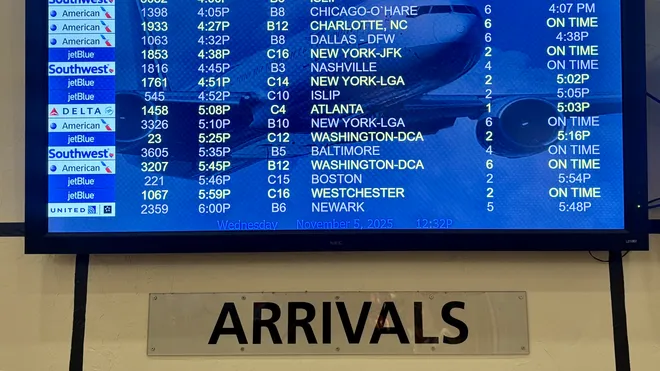
If you’re flying during this period of government shutdown flight delays, preparation is everything. Here’s how to minimize your stress:
- Check Flight Status Frequently: Use airline apps and real-time trackers before leaving for the airport.
- Arrive Early: TSA staffing issues can cause unpredictable security lines.
- Avoid Tight Layovers: Expect delays and plan for longer connections.
- Book Morning Flights: Early flights are less likely to be delayed or canceled.
- Stay Informed: Follow FAA and airline updates daily.
While travelers can’t control the shutdown, these steps can help reduce disruption.
Can Congress Fix This Before It Gets Worse?
Political analysts say bipartisan negotiations are inching forward, but a quick fix seems unlikely. Lawmakers remain divided on budget priorities, leaving federal operations—including the FAA—underfunded.
Every passing day without resolution adds pressure on both political parties, as public anger grows. Aviation unions have begun calling for immediate action, warning that prolonged government shutdown flight delays could jeopardize safety if staff fatigue and morale continue to drop.
The Bigger Picture: Trust in Systems
Beyond missed flights and empty terminals, the government shutdown flight delays crisis reflects a deeper national issue: the erosion of public trust in government stability.
When essential systems like aviation falter due to politics, everyday Americans are reminded how interconnected their lives are with federal decisions. Whether it’s a delayed paycheck or a canceled flight, the shutdown affects everyone, regardless of political stance.
This moment might be another warning sign—one that urges future administrations to build more resilient operational systems that can withstand political turbulence.
Final Approach: What Lies Ahead
The reality is clear: government shutdown flight delays are not just an inconvenience—they’re a reflection of a nation in limbo. Each grounded plane tells a story of missed opportunities, financial strain, and fading patience.
As Washington debates and travelers wait in crowded terminals, one truth remains: the country’s infrastructure, like its politics, can’t afford to stay on standby.
If there’s one takeaway from this crisis, it’s that stability isn’t just about government budgets—it’s about keeping the country moving, literally and figuratively.
Verdict
The government shutdown flight delays have turned airports into political battlegrounds, testing patience and systems alike. Until leadership finds common ground, America’s skies will remain clouded by uncertainty.
Click Here for the Latest Headlines
Read the Latest Cricket Insights Here












Leave a Reply