

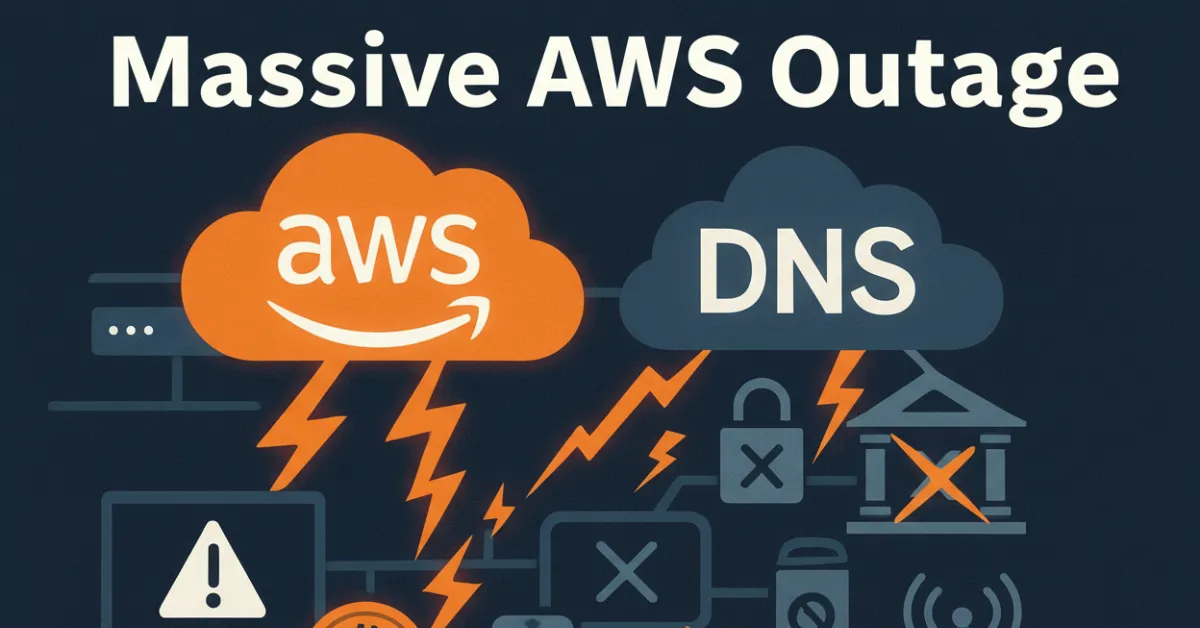
Massive AWS Outage Disrupts Global Websites and Apps
The digital world fractured on October 20, 2025, as Massive AWS Outage Disrupts Major Websites brought a significant swath of the internet to its knees. From vital financial transactions on Venmo and Coinbase to the escapist realms of Fortnite and the cinematic experience of Prime Video, popular online services worldwide buckled under the weight of the disruption. The incident underscored a stark reality: the modern internet, reliant on a handful of colossal cloud providers, remains profoundly vulnerable when a single pillar falters.
The Outage Unfolds
Massive AWS Outage Disrupts Major Websites, The cascading failures began in the early hours of Monday morning, around 12:11 AM ET. AWS’s crucial US-EAST-1 region, a sprawling data center hub in Northern Virginia that underpins countless global platforms, reported systemic instabilities. Amazon swiftly updated its status page, confirming “significant error rates” emanating from its DynamoDB endpoint – a foundational database service – and other critical offerings housed within the impacted region.
What followed was a swift descent into digital chaos. Streaming platforms stuttered, social applications froze, online gaming communities ground to a halt, and financial services worldwide faced crippling accessibility issues. As the outages spread, frustrated users flooded monitors like Downdetector, each refresh a testament to the internet’s collective groan as its invisible infrastructure faltered.
Platforms Severely Affected
- Gaming: Fortnite reported severe connectivity problems, halting game access for millions of players.
- Social Media & Communications: Snapchat users faced interruptions messaging and sharing, while Signal also confirmed outages.
- Finance: Cryptocurrency exchange Coinbase and trading app Robinhood acknowledged service disruptions.
- Streaming & Entertainment: Amazon Prime Video and Hulu experienced partial outages impacting streaming quality or availability.
- Other Apps: Popular platforms such as Venmo, Canva, Disney+, Reddit, and Lyft’s ride-hailing app encountered significant service disruptions.

Impact on Businesses and Users
For businesses depending on AWS’s cloud infrastructure, the outage translated directly into revenue losses, user frustrations, and operational challenges. Many startups and large enterprises rely on AWS for real-time data processing, cloud storage, and critical application hosting. During the outage, customers were unable to access key services or perform daily tasks, emphasizing the systemic risk tied to cloud service dependencies.
End-users experienced slow or failed app logins, interrupted transactions, and delayed content delivery. Social media platforms saw reduced engagement as users faced barriers to communication.
AWS Response and Recovery Efforts
Amazon’s engineering teams responded swiftly, engaging deeply to isolate the root cause. By early Monday morning, AWS confirmed it was actively pursuing “multiple parallel paths” to expedite recovery. Updates detailed ongoing troubleshooting efforts centered around the DynamoDB endpoint and adjacent services within the Northern Virginia data center.
By 6 AM ET, many services began gradual recovery, though intermittent disruptions persisted for certain AWS-dependent applications. Amazon emphasized its commitment to transparency, advising users to monitor the AWS status dashboard for real-time progress.
Why This Outage Matters
AWS controls roughly one-third of the global cloud infrastructure market, directly competing with Microsoft Azure and Google Cloud. Its infrastructure supports millions of websites, apps, and enterprise services worldwide. Even brief outages can cascade across diverse industries, highlighting the critical nature of cloud reliability in the digital age.
Additionally, AWS’s outage sheds light on the importance of multi-region redundancy and disaster recovery protocols for businesses to mitigate risks of dependency on a single cloud region.
Lessons for the Cloud Era
The Amazon outage underscores several important considerations:
- Cloud Dependency Risks: Businesses should architect systems leveraging multi-cloud or multi-region failover strategies.
- Transparency and Communication: AWS’s prompt updates set a standard for incident communication in crisis.
- User Patience and Alternatives: Disruptions highlight the need for users to stay informed and evaluate backup tools when key platforms are down.
Conclusion: The Cloud’s Fragile Backbone
October 20’s AWS outage was a stark reminder of how interconnected and dependent modern services are on major cloud providers. While Amazon’s response was rapid and recovery underway, the incident revealed vulnerabilities in internet infrastructure that both businesses and users must acknowledge. As cloud technologies continue to dominate digital innovation, resilience and preparation become more vital than ever.
Stay tuned for further updates from AWS and impacted platforms as recovery progresses. This incident will likely prompt cloud customers to reassess their own strategies for uptime assurance and disaster recovery in an increasingly cloud-dependent world.












Leave a Reply