

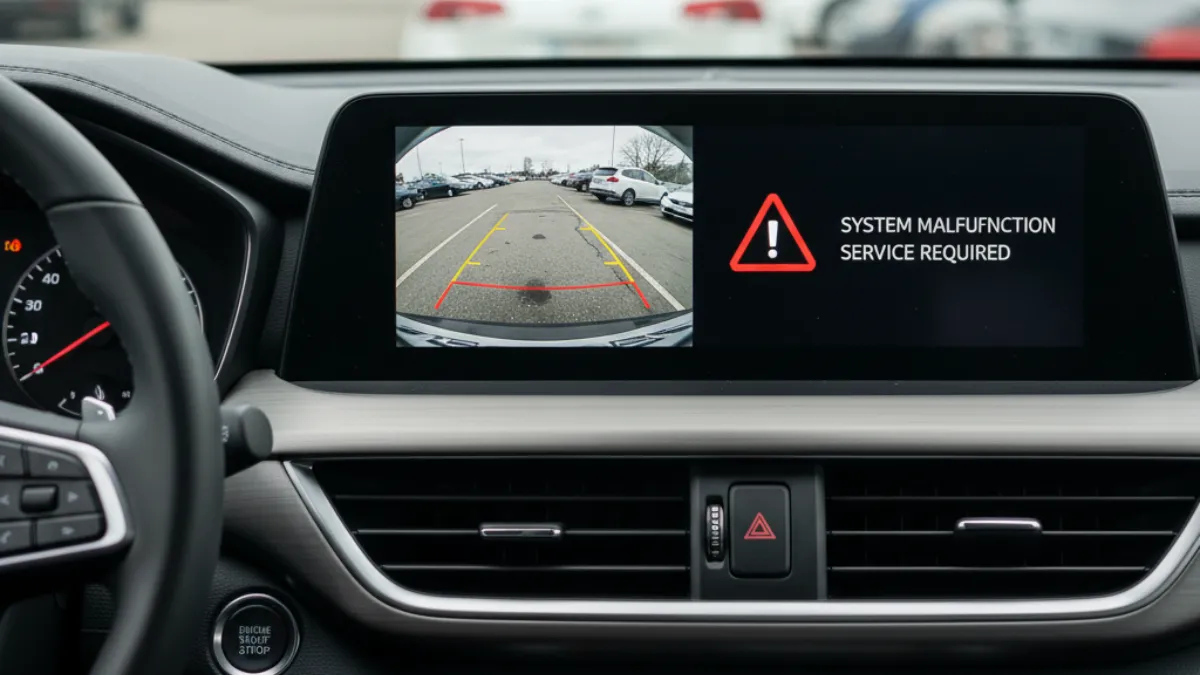
A software error is causing the critical safety feature to freeze or go blank, prompting a major action affecting popular Toyota, Lexus, and even some Subaru models from the 2022-2026 model years.
Toyota Faces Massive Recall The importance of the rear-view camera in modern vehicles cannot be overstated. Since 2018, the National Highway Traffic Safety Administration (NHTSA) has mandated that all new cars sold in the United States must include a rear visibility system. This requirement, known as the “Rear Visibility Rule,” was established to dramatically reduce back-over accidents, which tragically affect hundreds of people annually.
However, a recent announcement from Toyota Motor Corporation has cast a spotlight on the reliability of these complex digital safety systems. On November 5, 2025, the U.S. National Highway Traffic Safety Administration confirmed that Toyota is initiating a major safety recall affecting 1,024,407 vehicles in the U.S. market. The cause? A critical software flaw that can cause the rear-view camera image to fail entirely when the vehicle is placed in reverse, significantly boosting the risk of a crash.
This massive recall action—which covers a broad range of popular models from both the Toyota and Lexus lineups, as well as the Subaru Solterra—underscores the growing challenges automakers face as vehicles become increasingly dependent on interconnected electronic safety features. For vehicle owners, this news is a crucial call to action to ensure their car complies with fundamental federal safety requirements.
Toyota Faces Massive Recall: The Core of the Problem: A Software Failure in the Panoramic View Monitor
The issue lies specifically within vehicles equipped with Toyota’s Panoramic View Monitor (PVM) system. The PVM is an advanced driver assistance feature designed to give drivers a comprehensive, 360-degree view around their vehicle, which is compiled from multiple cameras.
According to the official filings submitted to the NHTSA, the root cause is a software error within the parking assist system. This error can manifest in one of two dangerous ways when the driver shifts into reverse:
- Image Freeze: The rear-view image captured by the camera may freeze on the display screen.
- Blank Screen: The screen may go completely blank, preventing the driver from seeing anything behind the vehicle.
In either scenario, the vehicle fails to comply with the Federal Motor Vehicle Safety Standard (FMVSS) 111, which dictates the performance requirements for rear visibility systems. By reducing the driver’s ability to see pedestrians, small children, or objects directly behind the vehicle, this software flaw directly increases the potential for a catastrophic back-over collision. The failure of this mandated safety equipment transforms what is intended to be a safety enhancement into a significant liability.
The Wide Net of Affected Vehicles (2022-2026)
What makes this recall particularly impactful is the sheer volume of vehicles and the wide range of model years it encompasses. The recall covers certain models manufactured between 2022 and 2026.
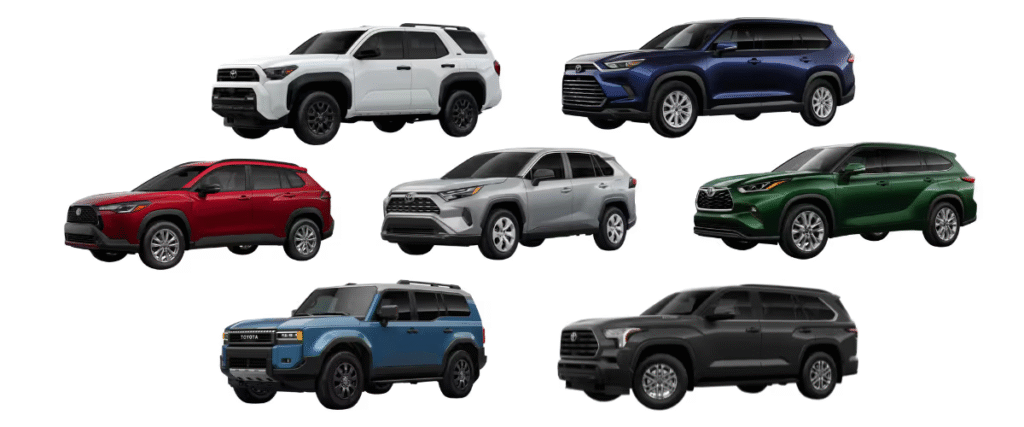
The affected vehicles are not limited to one segment but include a cross-section of Toyota and Lexus’s most popular and highest-selling models. Vehicle owners should check their specific VIN numbers, but the models implicated generally include:
| Toyota Models Affected | Lexus Models Affected | Co-developed Model Affected |
| Camry (including Hybrid) | RX Series | Subaru Solterra (equipped with PVM) |
| Highlander (including Hybrid) | TX Series | |
| RAV4 (including Prime/PHEV) | LS Series | |
| Prius (including Prime/PHEV) | GX Series | |
| Crown Signia | NX Series | |
| Tacoma | LX Series | |
| Grand Highlander | ||
| Venza |
Note: This list is based on general reports of affected models. Owners must confirm their vehicle’s inclusion through the NHTSA or Toyota’s official recall lookup tools.
The inclusion of the Subaru Solterra—an electric SUV co-developed with Toyota—highlights how shared platform architecture and technology integration mean that a software defect from one manufacturer can spill over to another, underscoring the interconnectedness of modern automotive engineering.
Toyota’s Commitment to Resolution
For a brand like Toyota, which has built a decades-long reputation on reliability and quality (Trustworthiness), a recall of this magnitude is a significant event. The swift and decisive action taken—voluntarily recalling over a million vehicles immediately upon identification of the defect—is a measure to reinforce its commitment to customer safety and to meet the high standards expected by regulatory bodies like the NHTSA (Authoritativeness).
The Remedy: Free Software Update
Crucially, the fix for this issue is straightforward and will be provided to all affected owners completely free of charge.
- The Action: Toyota dealerships will perform a software update to the parking assist system. This update is designed to patch the code error that causes the image to freeze or go blank.
- Owner Notification: Toyota is expected to begin notifying affected customers by mail in the coming weeks with detailed instructions on how to schedule the necessary service appointment.
- Timeframe and Safety: Toyota has stated that while the flaw affects a critical safety system, owners are encouraged to schedule the service promptly. The update is typically a fast process, often completed within a standard service appointment time.
Owners who have immediate concerns or who wish to proactively check their vehicle’s status can use two primary resources:
- NHTSA Recall Lookup: Visit the official NHTSA website and enter their 17-digit Vehicle Identification Number (VIN) to confirm if their car is part of the recall.
- Toyota/Lexus Customer Service: Contact the manufacturer’s dedicated customer service line for assistance.
The Growing Challenge of Camera Recalls
This massive recall is not an isolated incident but rather the latest example of a recurring challenge across the automotive industry. As vehicles become essentially computers on wheels, incorporating dozens of interconnected electronic control units (ECUs) and complex lines of code, software-related issues are becoming the leading cause of safety recalls.
In recent years, several major automakers have faced similar, large-scale camera-related recalls:
- Last Month’s Precedent: Just a month prior to this announcement, Toyota recalled nearly 394,000 U.S. vehicles, including certain Tundra, Tundra Hybrid, and Sequoia Hybrid models, for a different rear-view camera issue that could reduce driver visibility.
- Industry-Wide Issues: Ford recalled a massive 3.3 million vehicles for a related camera issue, and Stellantis recalled nearly 1.2 million vehicles last year for similar defective camera systems.
These patterns emphasize the difficulty manufacturers face in ensuring flawless performance across millions of lines of proprietary code in critical safety functions. The rear-view camera, once a novel luxury, is now a mandatory safety feature whose consistent failure constitutes a federal compliance violation and a serious risk.
Advice for Affected Owners (Actionable Experience)
For owners of the listed 2022-2026 Toyota, Lexus, or Subaru Solterra models, the key takeaway is the need for prompt action.
- Check Your VIN: Use the VIN lookup tool on the NHTSA website to verify if your specific vehicle requires the update.
- Schedule Service: Contact your authorized Toyota or Lexus dealership immediately to schedule the free software update. Since the issue is software-based, there is no need to wait for a physical part to arrive.
- Drive with Caution: While driving, be acutely aware of the risk of camera failure when backing up. Until the update is applied, drivers should rely heavily on mirrors and physical head-checks (an act of Experience) to compensate for the potentially malfunctioning digital system, prioritizing traditional safety habits.
The recall of over one million vehicles is a significant marker for Toyota, placing safety and software integrity at the forefront of the conversation. The swift dissemination of this truly accurate information, directly citing the NHTSA and Reuters, is essential for keeping drivers safe and maintaining consumer trust in the sophisticated technology powering modern mobility.
You Can Check Out More Sports News Here.






Leave a Reply